How I work
From your brief to content you can run
Every project follows the same steps, with a clear output at each stage. Below: what happens, what you receive, and an example of the creative thinking behind it.
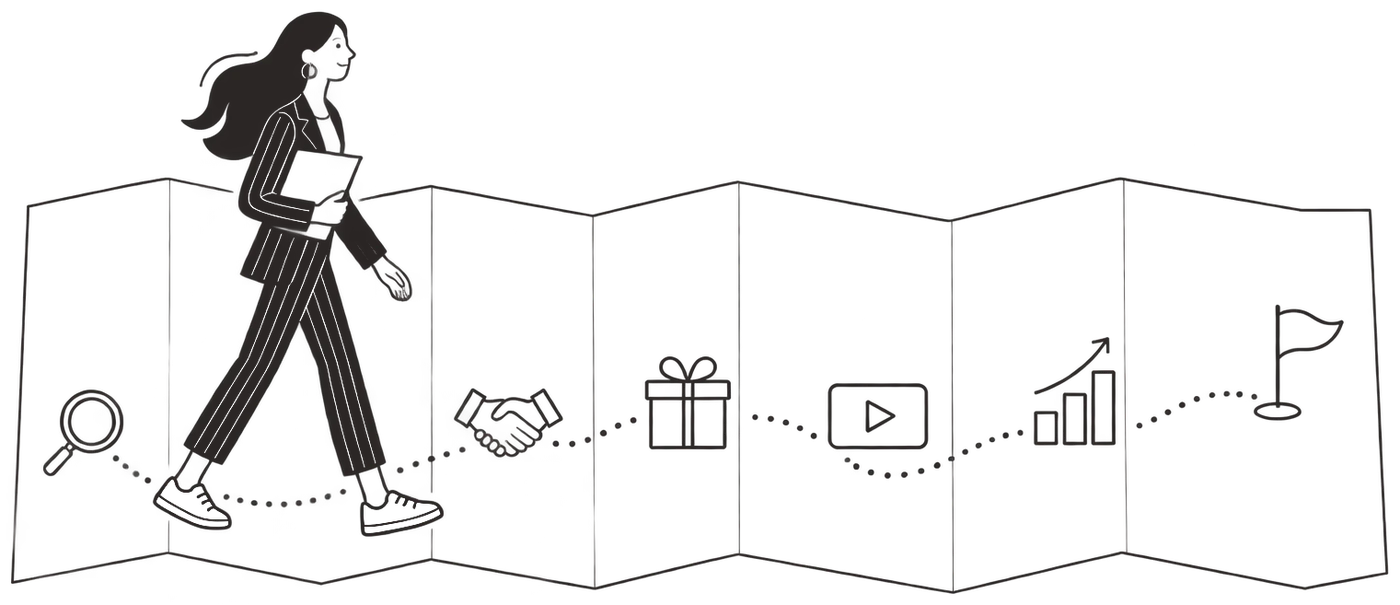
Step by step
What you receive at each stage
What you receive depends on the scope we agree: not every project includes every stage.
- Understand the brief
We establish the objectives, channels, requirements, timeline and scope, and agree your approval points in advance.
You receiveA written scope and quote
- Source and agree
I identify suitable creators and negotiate fees, deliverables and usage rights according to the project. For product seeding, I build the opted-in creator pool instead.
You receiveA creator shortlist and terms for your approval
- Manage and deliver
I manage the creator workflow, coordinate production and approvals, and deliver the contracted assets or campaign outputs. For product seeding, I coordinate invitations and shipping, and track what creators choose to share.
You receiveApproved content, live posts or a gifting record
- Prepare content for use
Where included in scope, I edit or adapt the content for the intended channels and hand it over to your team.
You receiveEdited versions and a rights sheet
- Optimise for next time
Once the content is live, I review what worked and what did not, and feed those learnings and best practices into your next briefs, so each round builds on the last.
You receiveLearnings to carry into your next briefs
 Understand the brief
 Source and agree
 Manage and deliver
 Prepare content for use
 Optimise for next time
Example: a UGC project
One creator, three hooks to test
Illustrative creative concept: fictional product and campaign, not client work.
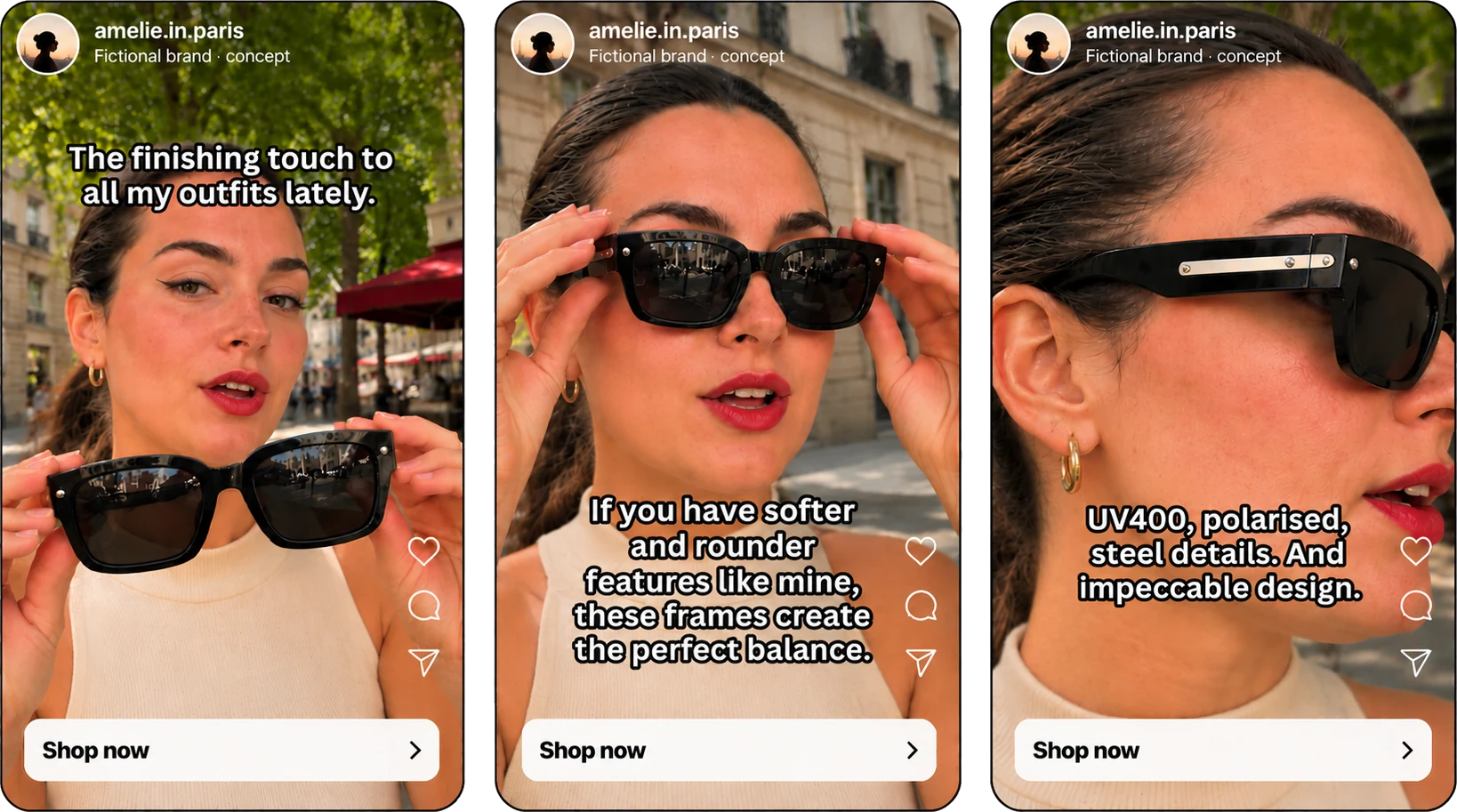
This example applies to UGC projects, where content is made for your own channels and ads. For a pair of sunglasses, the same creator films three openings, each built on a different reason to buy. Your team, or the agency running your ads, tests them as partnership ads and keeps the one that performs. Three hooks is only an example: the brief, the number of hooks and what each one must show are built around your brand’s needs.
What we test
Each hook tests one reason to buy, for example the look, who it suits, or what it is made of. The USPs and hook angles are agreed and signed off with you when we set the brief.
What we learn
Once the versions have run as ads and you share the results, I look at which one performed best against the KPIs you set. If there is a next campaign, that learning goes into its brief, so each round gets closer to the content that works best for your brand and your customers.
Method
What a brief from me looks like
A demonstration with an invented product, not a client project. Every UGC brief covers the same ground, so the creator knows what to film and your team knows what is coming.
| Product | Acetate sunglasses with steel details (invented example) |
|---|---|
| Scope | 1x Story frame, video format, 30 to 60 seconds |
| Objective | Conversions: 1. through an organic post with an affiliate discount code, 2. through Meta partnership ads |
| Creator | UK-based woman, 25 to 35, styles everyday outfits |
| Hooks to film | 1. The styling: “The finishing touch to all my outfits lately.” 2. The face shape: soft, round features balanced by square frames. 3. The specs: UV400, polarised, steel details. |
| Formats | 9:16 for Stories and Reels |
| Must show | The steel detail on the arm; the frames on and off the face |
| Usage | Raw file sent to the brand. Digital usage on organic social channels, paid social, newsletter and website, authorised for 12 months |
| Timeline | Product arrives day 1, drafts by day 10, final files by day 14 |

Tell me what you are working on
Start by sending me a few written details about your project, even without a full brief. Next steps depend on fit: once I have this information, I’ll get back to you with times for a call to discuss your needs.